The new headquarters of Sebrae in Rondônia is conceived as an architectural and institutional response to a mission that goes beyond administrative operations. The building strengthens the institution’s diversified presence, consolidates collaborative initiatives, and provides the conditions for a resilient and environmentally responsible small-business ecosystem. The proposal translates into built form the idea that fostering entrepreneurship should inspire processes and transform environments, combining spatial generosity, technical efficiency, and material identity.
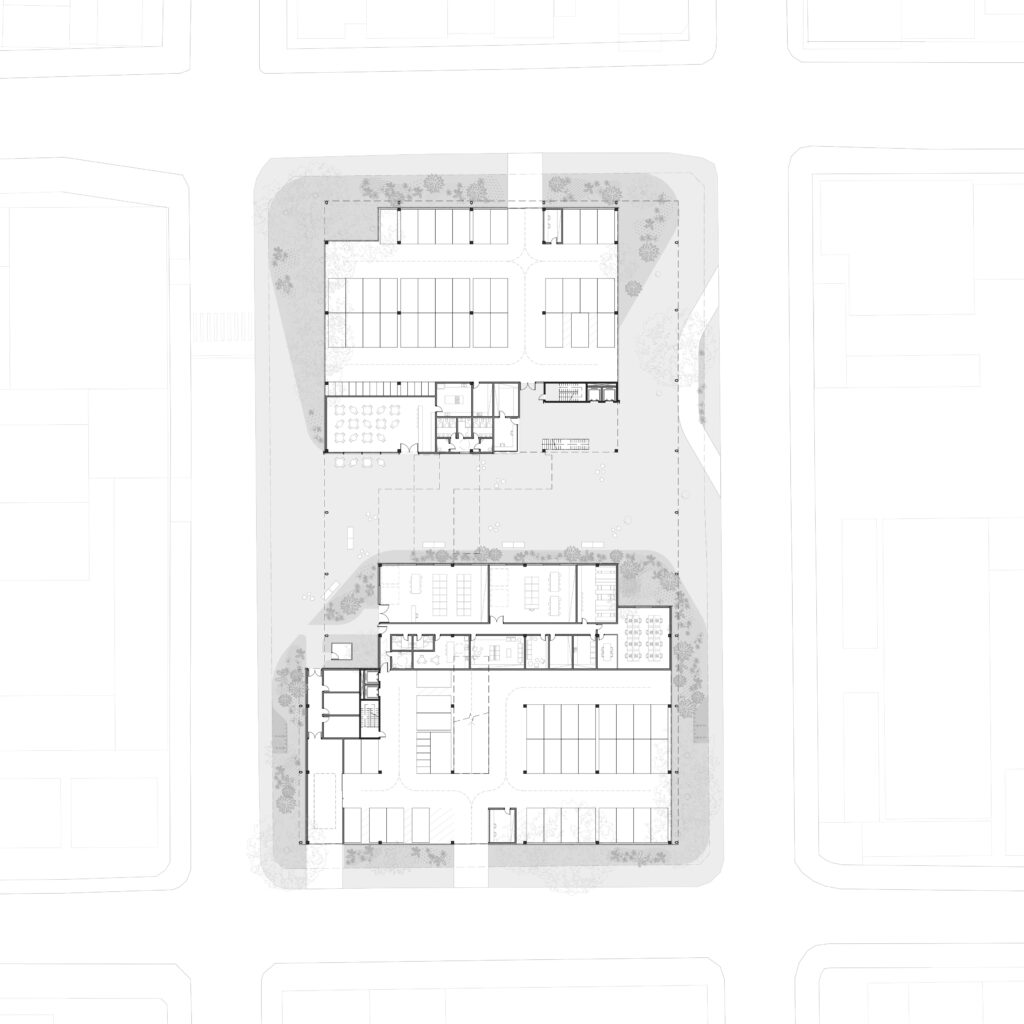
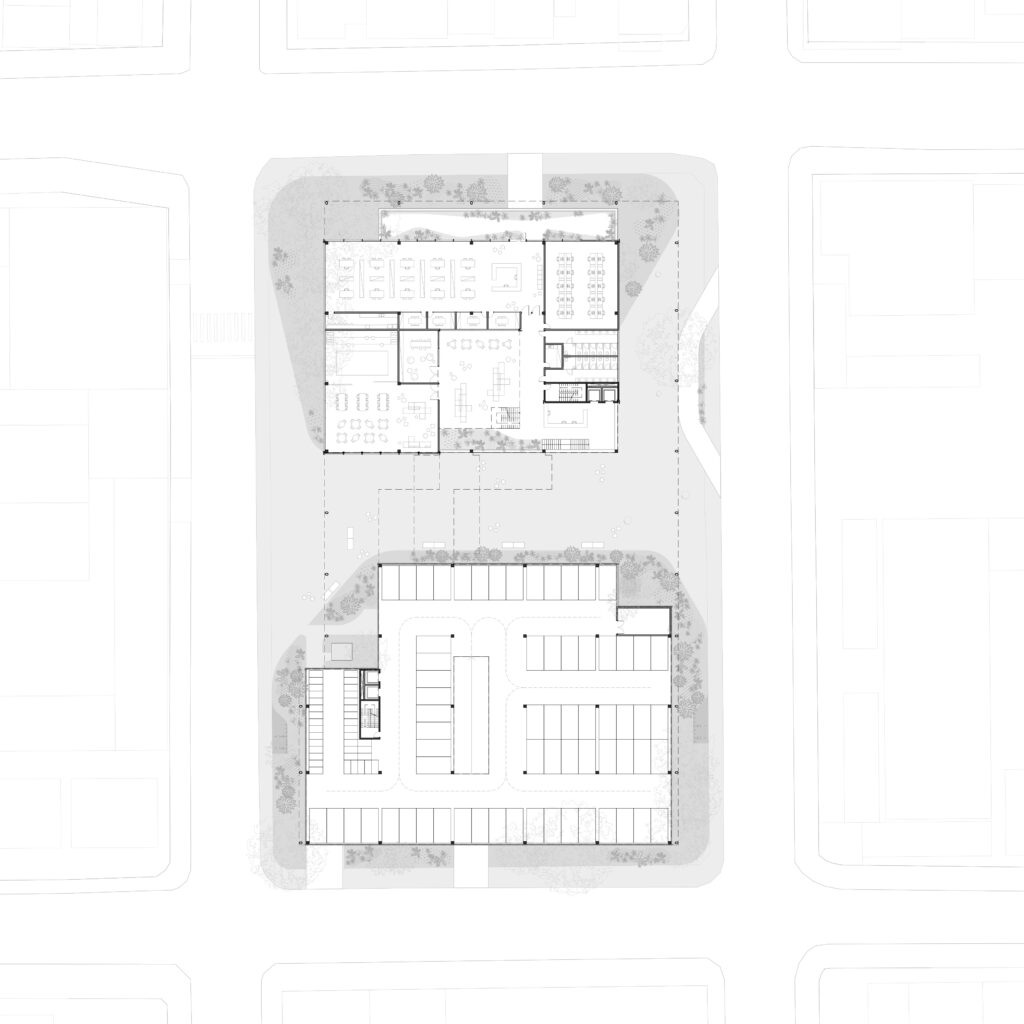
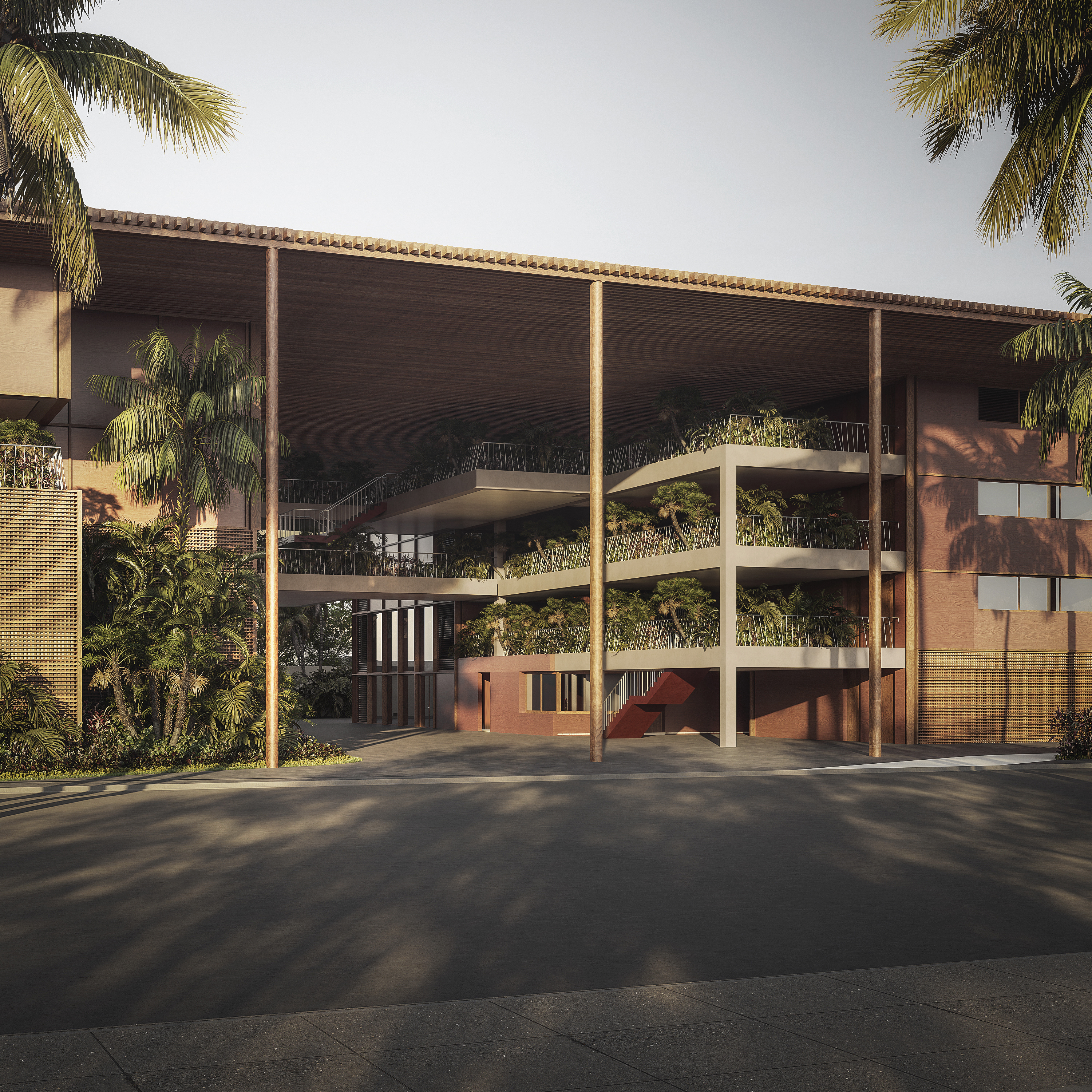
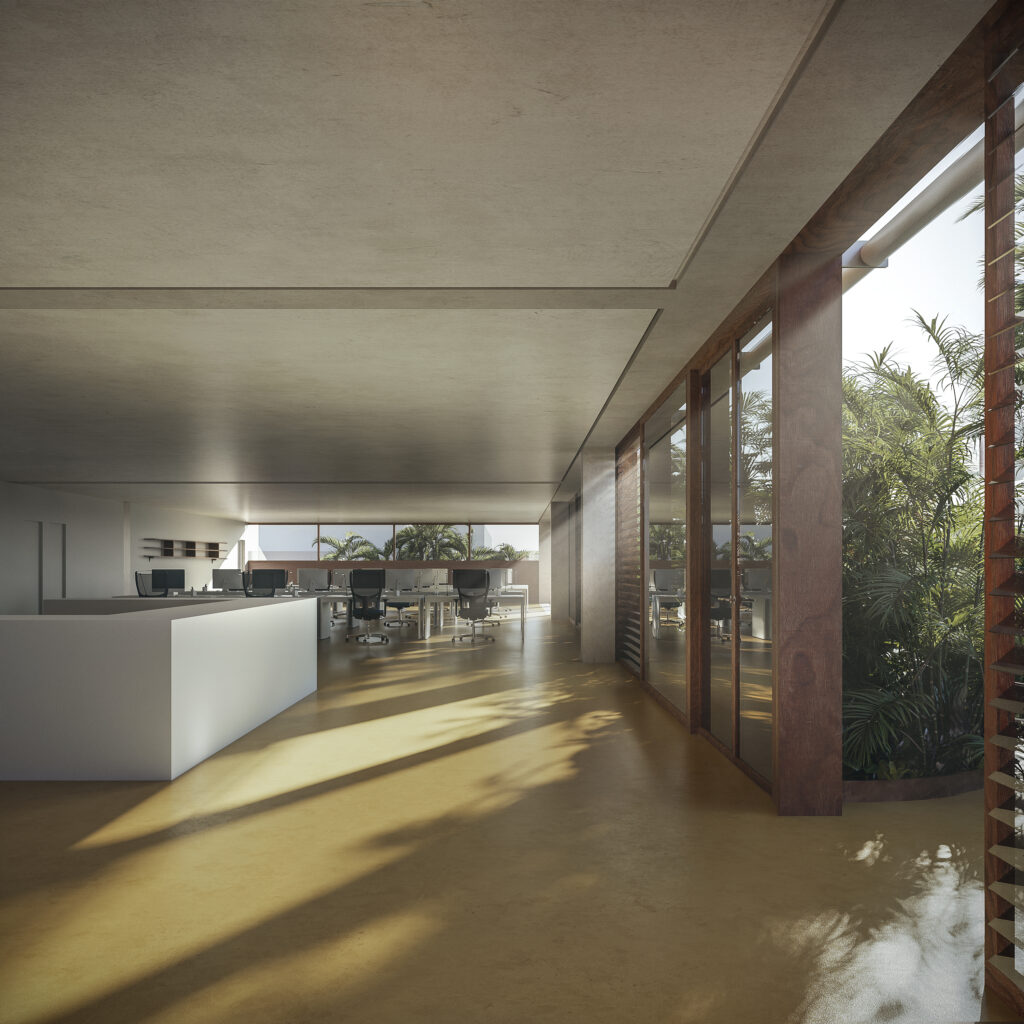
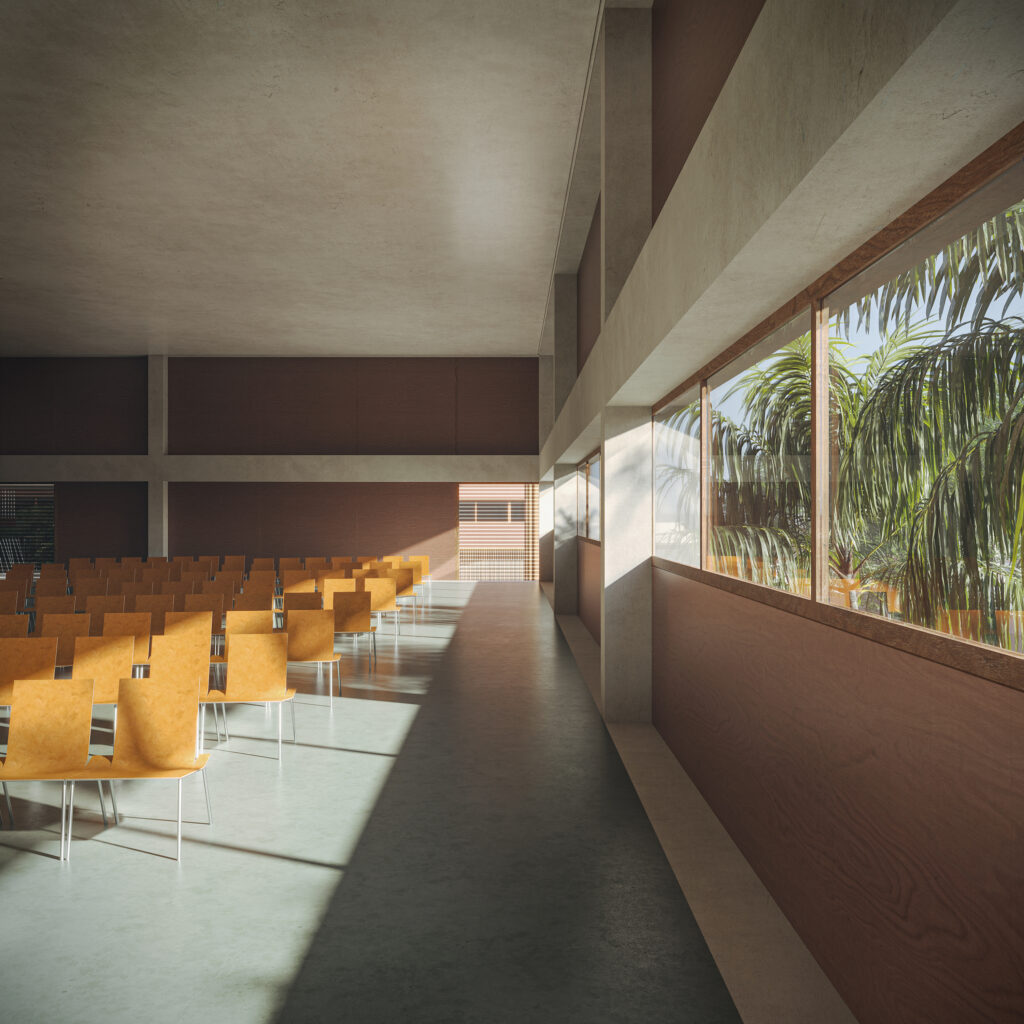
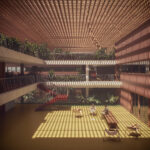
The formal concept is defined by a central plaza, conceived as a public atrium for access, social interaction, and urban articulation. From this structuring void, two parking areas are organized, guiding flows and access. From these spaces emerge two programmatic blocks, each with its own vertical circulation core: to the north, Zone B, dedicated to public service and training activities; to the south, Zone A, housing the administrative spaces. Between them lie the shared environments of Zone C, which integrate the building’s activities, while the technical areas of Zone D are distributed according to operational demands.
Visitor vehicle access is provided via Senador Álvaro Maia Street, while staff and service access occurs from Herbert de Azevedo Street. Employee parking is organized on two levels, with the ground floor reserved for priority spaces and the institutional parking space. This arrangement supports the design of a permeable and active ground floor. The main pedestrian access from Campos Sales Avenue extends through to Júlio de Castilhos Street, forming a public axis that integrates the building with its surroundings. The resulting plaza accommodates events and exhibitions, constituting Sebrae’s primary public interface in Porto Velho.
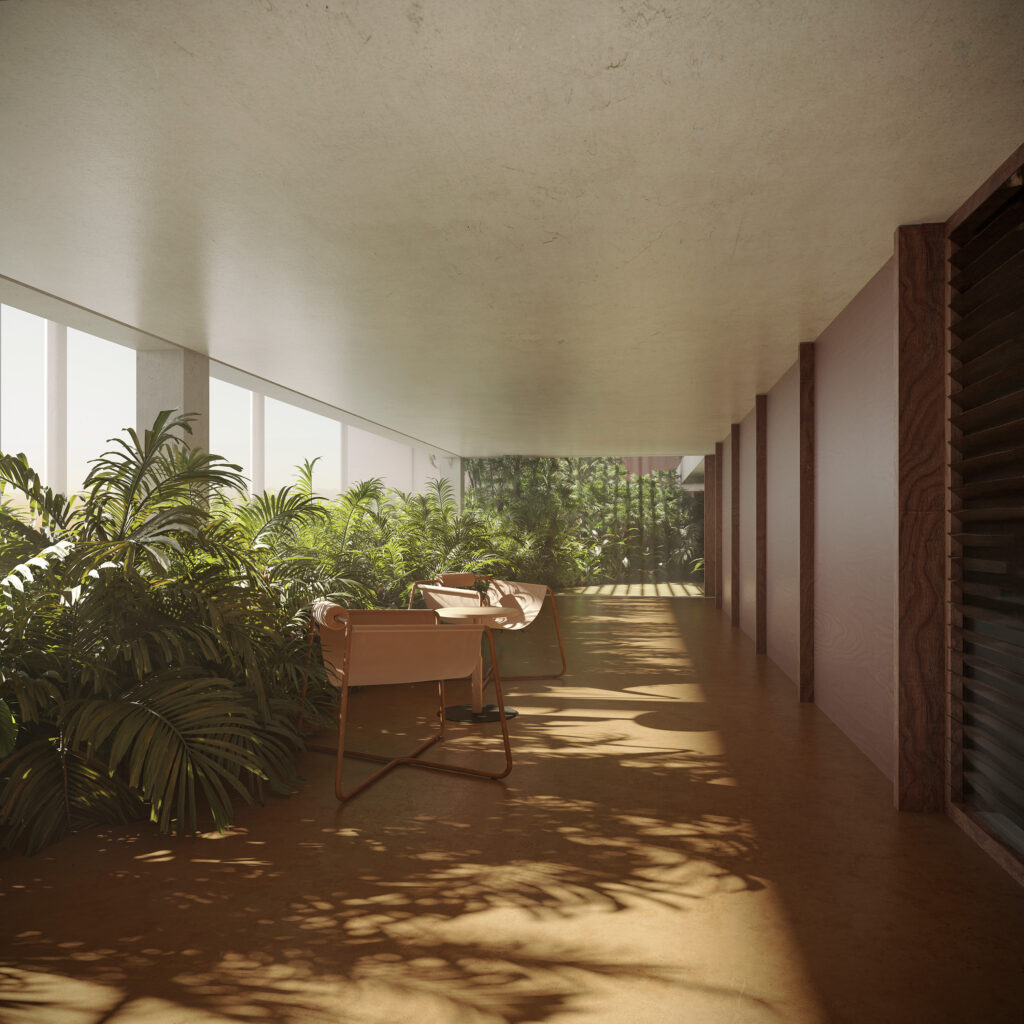
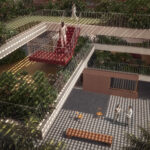
The program is organized according to functional affinities, encouraging intuitive circulation. The building is open and adaptable: balconies, courtyards, and voids form democratic arenas for gathering and spaces for exchange. These voids also operate as passive comfort strategies, providing shading, thermal dissipation, and cross-ventilation guided by the prevailing southern winds. The walkways connecting the blocks function as extensions of the social areas, enhancing circulation quality and reinforcing integration. Social staircases expand movement alternatives and strengthen spatial continuity between floors.
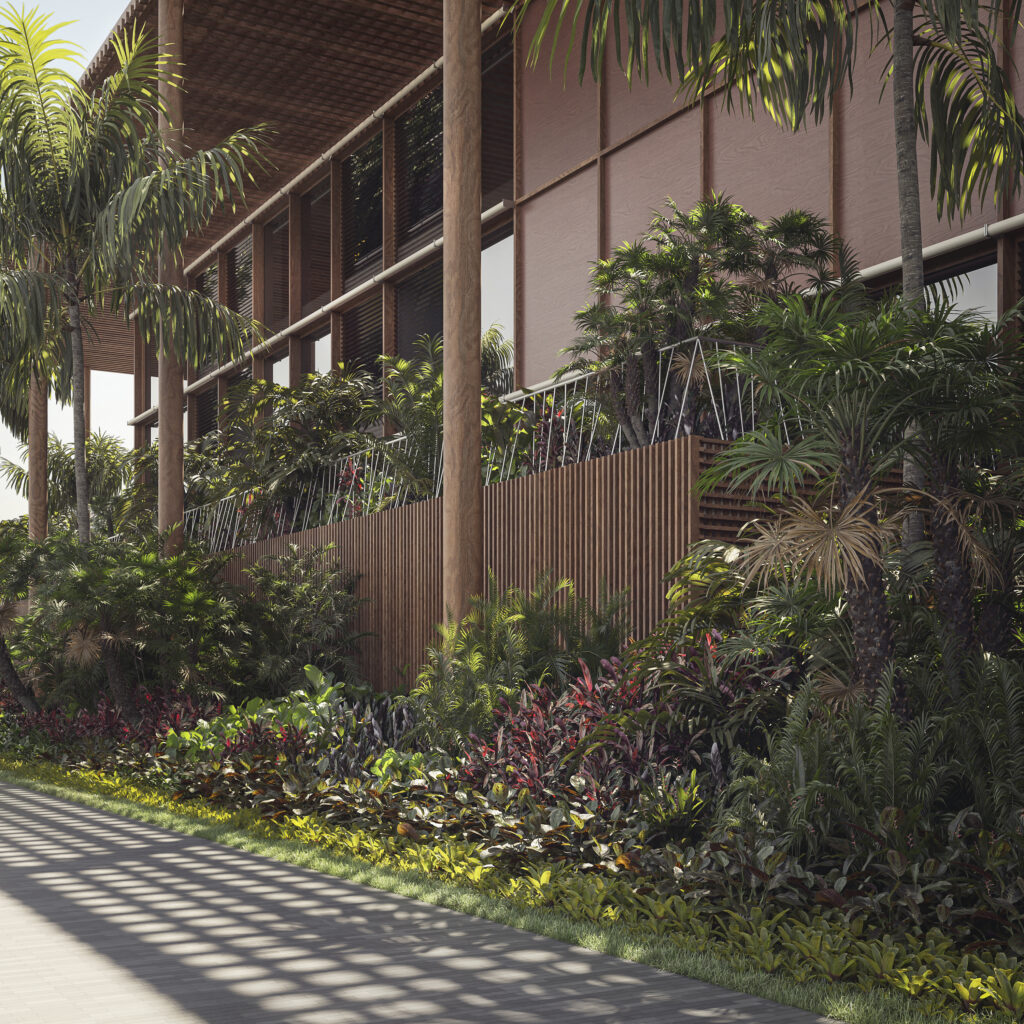
The structural solution prioritizes reinforced concrete due to local availability, skilled labor, and its balance between economy and robustness. A regular structural grid of 10.0 × 10.5 meters rationalizes beams, columns, and foundations. Ribbed slabs are employed to span longer distances while maintaining compactness. Materiality seeks territorial coherence and performance: sawn timber, widely available in the region, is adopted as the primary cladding material. In the parking areas, timber slatted panels arranged in a square grid ensure cross-ventilation and solar protection; on the roof, the same grid modulates light and shadow, reinforcing architectural continuity.
The integration of urban concept, programmatic organization, environmental strategies, structural logic, and local materiality results in an architecture that is efficient, clear, and committed to its public role. The new headquarters strengthens regional entrepreneurship, intensifies relationships, and enhances everyday urban life – a civic and enduring building.